
Air Fryer Liners Guide: Parchment, Foil, Silicone & More
Last updated: February 12, 2026
Air fryer liners can make cleanup easier and prevent sticking — but not all liners are created equal.
Using the wrong liner (or using one incorrectly) can block airflow, reduce crispiness, or create safety risks.
This complete guide explains:
- The different types of air fryer liners
- When to use each one
- What to avoid
- Which option is best for your cooking style
What Are Air Fryer Liners?
Air fryer liners are materials placed inside the basket or tray to:
- Reduce sticking
- Catch grease
- Simplify cleanup
- Protect nonstick coating
Common types include:
- Parchment paper
- Aluminum foil
- Silicone liners
- Disposable paper liners
- Reusable mesh liners
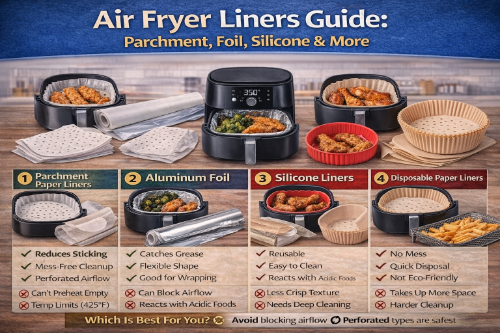
1. Parchment Paper Liners
Best For
- Sticky or saucy foods
- Breaded items
- Easy cleanup
Pros
- Non-reactive
- Reduces sticking
- Widely available
- Perforated versions improve airflow
Cons
- Must be weighed down by food
- Can block airflow if oversized
- Has temperature limits (usually 425°F)
Important Tip
Never preheat with loose parchment inside.
For full safety details, read:
- Can You Put Parchment Paper in an Air Fryer?
2. Aluminum Foil
Best For
- Catching grease
- Wrapping delicate foods
- Preventing drips
Pros
- Durable
- Good for wrapping
- Flexible shaping
Cons
- Can block airflow
- Reacts with acidic foods
- May damage nonstick coating if misused
Foil must never be used in an empty basket.
Learn more here:
- Can You Put Foil in an Air Fryer?
3. Silicone Air Fryer Liners
Reusable silicone liners are becoming popular.
Best For
- Frequent users
- Reusable eco-friendly option
- Protecting nonstick surfaces
Pros
- Washable and reusable
- Durable
- No burning risk
Cons
- May slightly reduce crispiness
- Needs thorough cleaning
- Must fit basket properly
Silicone liners work best when airflow remains open around edges.
4. Disposable Air Fryer Paper Liners
These are pre-shaped, bowl-style liners.
Best For
- Very quick cleanup
- High-grease foods
- Minimal scrubbing
Pros
- Convenient
- Designed for basket shape
- Easy disposal
Cons
- Can reduce airflow
- May trap moisture
- Not eco-friendly
Choose perforated versions for better results.
5. Reusable Mesh or Rack Liners
Some models include:
- Metal mesh trays
- Elevated racks
Best For
- Extra airflow
- Dehydrating
- Multi-layer cooking
These are more accessories than traditional liners.
Do Air Fryer Liners Affect Crispiness?
Yes — sometimes.
Air fryers rely on airflow.
If liners:
- Cover too much surface area
- Block vents
- Prevent bottom airflow
Food may turn soggy.
For best crispiness:
- Use perforated liners
- Avoid full coverage
- Cook in single layers
Which Air Fryer Liner Is Best?
For Most People
Perforated parchment liners are the safest balance of:
- Ease
- Cleanup
- Airflow
- Crispiness
For Frequent Users
Reusable silicone liners are cost-effective long term.
For Greasy Foods
Foil or disposable liners can help contain drips.
What You Should Avoid
❌ Wax paper (not heat safe)
❌ Plastic liners
❌ Loose liners during preheat
❌ Blocking airflow completely
Always prioritize airflow.
Frequently Asked Questions
Do liners damage air fryers?
Not if used properly and airflow remains open.
Are liners necessary?
No — many people cook without them. They’re optional for convenience.
Can liners cause smoke?
Only if grease builds up or airflow is blocked.
Final Recommendation
Air fryer liners are helpful tools — not required.
For most beginners:
- Start without liners
- Add perforated parchment when needed
- Avoid blocking airflow
Always remember: airflow is everything.
For more safety and usage tips, read: