
Air Fryer Glossary: Terms Every Beginner Should Know
Last updated: February 12, 2026
If you’re new to air frying, you’ve probably seen terms like crisper plate, dual zone, Smart Finish, or convection technology and wondered what they actually mean.
This Air Fryer Glossary explains the most common air fryer terms in simple, clear language so you can:
* Understand product descriptions
* Follow recipes confidently
* Compare models more easily
* Avoid common beginner confusion
Use this page as a reference whenever you need a quick definition.
🔤 Air Fryer Terms A–Z
Air Fryer
A countertop appliance that circulates hot air rapidly to cook food, creating a crispy outer texture similar to deep frying but with little to no oil.
Air Fryer Oven
A larger, oven-style air fryer that looks like a small toaster oven. These usually have multiple racks and higher capacity than basket models.
Airflow
The movement of hot air inside the cooking chamber. Proper airflow is essential for crisp, even cooking. Overcrowding blocks airflow.
Basket
The removable container that holds food in traditional air fryers. Usually coated with nonstick material.
Batch Cooking
Cooking multiple rounds of food instead of overloading the basket. This improves crispness and even cooking.
Capacity (Quarts or Liters)
The amount of food the air fryer can hold. Measured in quarts (US) or liters (international). Larger capacity usually means more counter space required.
Convection Cooking
A cooking method that uses a fan to circulate hot air. Air fryers are essentially compact convection ovens.
Crisper Plate (or Crisper Tray)
A perforated insert that elevates food slightly, allowing air to circulate underneath for better browning.
Dehydrate Function
A low-temperature setting used to remove moisture from foods like fruit, vegetables, or jerky over an extended period.
Dual Basket
An air fryer with two separate cooking compartments that can run independently.
Dual Zone
Similar to dual basket, but specifically refers to models that allow different temperatures and times in each compartment.
Food Thermometer
A kitchen tool used to measure internal food temperature to ensure safe cooking, especially for meat.
Heating Element
The internal component that generates heat. Usually located at the top of the air fryer.
Match Cook
A feature on dual-basket models that copies settings from one basket to the other.
Nonstick Coating
A protective surface inside the basket or tray that prevents food from sticking. Avoid metal utensils to preserve it.
Overcrowding
Placing too much food in the basket or tray. This reduces airflow and leads to soggy or uneven results.
Parchment Paper (Air Fryer Safe)
Special perforated paper designed for air fryers. Must be weighed down with food to prevent contact with the heating element.
Preheat
Running the air fryer empty for a few minutes before adding food. Helps with even cooking and crisp texture.
Presets
Pre-programmed cooking functions for foods like fries, chicken, or fish. Useful but not always perfectly accurate.
PTFE / PFOA-Free
Refers to the safety standards of nonstick coatings. Most modern air fryers advertise PTFE/PFOA-free materials.
Rack
An accessory that allows multi-layer cooking inside oven-style air fryers.
Reheat Function
A setting designed to warm leftovers while restoring crispness.
Shake Reminder
A timer alert that reminds you to shake or flip food halfway through cooking.
Smart Finish
A feature on dual-basket air fryers that syncs cooking times so both baskets finish at the same time.
Temperature Range
The adjustable heat range of the appliance, typically 180°F to 400°F (82°C–200°C).
Wattage
The electrical power rating of the air fryer. Higher wattage usually means faster heating but higher energy use.
📌 Why Understanding These Terms Matters
Knowing air fryer terminology helps you:
* Avoid buying the wrong size
* Understand product comparisons
* Follow recipes more accurately
* Prevent beginner mistakes
* Cook more confidently
If you’re new to air frying, start with our How to Use an Air Fryer (Beginner Guide) and explore our Air Fryer Cooking Times Chart for practical help.
Frequently Asked Questions
💬 Q: What is the difference between an air fryer and a convection oven?
🔹 A: An air fryer is a smaller, more compact convection appliance that circulates air more aggressively, often leading to faster cooking and crispier textures.
💬 Q: Do all air fryers need preheating?
🔹 A: Not all models require it, but preheating can improve results, especially for frozen foods.
💬 Q: What does dual zone mean?
🔹 A: It means the air fryer has two independent cooking compartments that can run at different temperatures and times.
Related Guides
* How To Clean Your Air Fryer (Step-by-Step Guide)
* Top Mistakes People Make While Using Air Fryers
* Air Fryer Beginner Learning Hub
Final Thoughts
Air fryers are simple once you understand the terminology. This glossary is designed to remove confusion and make cooking easier for beginners and experienced users alike.
Bookmark this page as a reference, and explore the rest of AirFryerTrend.com for guides, reviews, and practical cooking tips.
Air Fryer Cooking Times For Common Foods
One of the most common air fryer questions is simple:
“How long do I cook this?”
Cooking times can vary depending on the food, portion size, and air fryer model, but having a reliable starting point makes air frying much easier. This guide covers air fryer cooking times for common foods, including frozen items, vegetables, meat, and snacks.
Use these times as a baseline, then adjust as needed for your specific air fryer.
Important Notes Before You Start
* Cooking times assume food is placed in a single layer
* Shake or flip food halfway through when possible
* Preheating may reduce total cook time slightly
* Always check food early to avoid overcooking
Air fryers cook faster than ovens, so small adjustments make a big difference.
If you are new to air fryers, start with our air fryer beginner guide to learn proper setup and use.
Frozen Foods Cooking Times
Frozen foods are some of the easiest items to cook in an air fryer.
| Food | Temperature | Time |
| French fries | 380°F | 12–18 minutes |
| Tater tots | 400°F | 10–15 minutes |
| Chicken nuggets | 400°F | 10–14 minutes |
| Chicken wings (frozen) | 400°F | 18–22 minutes |
| Mozzarella sticks | 370°F | 6–8 minutes |
| Fish sticks | 390°F | 10–12 minutes |
Shake or flip halfway for even crisping.
Vegetables Cooking Times
Vegetables cook quickly and crisp well in an air fryer.
| Vegetable | Temperature | Time |
| Broccoli florets | 375°F | 8–12 minutes |
| Brussels sprouts | 375°F | 12–16 minutes |
| Carrots (sliced) | 380°F | 12–15 minutes |
| Zucchini | 375°F | 8–10 minutes |
| Asparagus | 380°F | 7–10 minutes |
| Bell peppers | 375°F | 8–10 minutes |
Light oil and seasoning improve flavor and texture.
Chicken Cooking Times
Always check internal temperature when cooking poultry.
| Chicken Cut | Temperature | Time |
| Chicken breasts | 370°F | 15–20 minutes |
| Chicken thighs | 380°F | 18–22 minutes |
| Chicken wings (fresh) | 400°F | 20–25 minutes |
| Drumsticks | 380°F | 20–25 minutes |
| Chicken tenders | 375°F | 12–15 minutes |
Safe internal temperature: 165°F (74°C).
Beef and Pork Cooking Times
| Meat | Temperature | Time |
| Steak (1 inch thick) | 400°F | 10–14 minutes |
| Pork chops | 380°F | 12–15 minutes |
| Burgers | 375°F | 10–12 minutes |
| Meatballs | 380°F | 10–14 minutes |
| Sausages | 380°F | 12–15 minutes |
Flip halfway and let meat rest briefly after cooking.
Seafood Cooking Times
| Seafood | Temperature | Time |
| Salmon fillets | 375°F | 8–12 minutes |
| Shrimp | 400°F | 6–8 minutes |
| Tilapia | 380°F | 10–12 minutes |
| Cod | 380°F | 10–13 minutes |
Fish is done when opaque and flakes easily.
Snacks and Reheating Times
Air fryers are excellent for reheating leftovers.
| Food | Temperature | Time |
| Pizza slices | 350°F | 3–5 minutes |
| Spring rolls | 375°F | 6–8 minutes |
| Egg rolls | 380°F | 8–10 minutes |
| Leftover fries | 375°F | 4–6 minutes |
| Grilled sandwiches | 350°F | 3–5 minutes |
Reheating in an air fryer often restores crispness better than a microwave.
Tips for Accurate Cooking Times
* Start with less time and add more if needed
* Keep food pieces similar in size
* Do not overcrowd the basket
* Shake or flip halfway
* Use a meat thermometer for accuracy
Different air fryer brands and sizes can cook at slightly different speeds.
Understanding cooking times also helps when converting oven recipes to an air fryer
Frequently Asked Questions
Why do air fryer cooking times vary?
Air fryer size, wattage, food thickness, and basket airflow all affect cooking speed.
Do I need to preheat my air fryer?
Some recipes benefit from preheating, especially frozen foods, but many air fryers do not require it.
Can I cook different foods at the same time?
Only if they require similar temperatures and cooking times, or if your air fryer has dual baskets.
Final Thoughts
Air fryer cooking times are a helpful guide, not a strict rule. Once you understand how your air fryer performs, you will be able to adjust quickly and cook with confidence.
Use this chart as a reference, check food early, and make small adjustments for perfect results every time.
For more beginner-friendly guides and cooking tips, explore AirFryerTrend.com.
Air Fryer Safety & Best Practices
Air fryers are convenient, fast, and easy to use, but like any kitchen appliance, they need to be used properly. Understanding basic air fryer safety and best practices helps prevent accidents, protects your appliance, and ensures better cooking results.
This guide covers essential air fryer safety tips, common mistakes to avoid, and best practices every home cook should follow.
Why Air Fryer Safety Matters
Air fryers use high heat, powerful fans, and electrical components. When used incorrectly, they can:
* Overheat
* Produce smoke
* Damage countertops or cabinets
* Cause burns or electrical issues
* Shorten the lifespan of the appliance
Following basic safety rules keeps your kitchen safe and your air fryer working properly.
Proper Placement Of Your Air Fryer
Where you place your air fryer matters more than many people realize.
Best practices:
* Place the air fryer on a flat, heat-resistant surface
* Leave at least a few inches of space on all sides
* Keep it away from walls, cabinets, and flammable items
* Never place it near water or a sink
Avoid using your air fryer under low cabinets, as hot air vents upward during cooking.
Electrical Safety Tips
Air fryers draw a significant amount of power.
Follow these rules:
* Plug directly into a wall outlet
* Avoid extension cords or power strips
* Do not overload the outlet with other appliances
* Unplug the air fryer when not in use
If the cord is damaged, stop using the appliance and contact the manufacturer.
Safe Cooking Practices
Do Not Overfill the Basket
Overcrowding blocks airflow and can cause uneven cooking or overheating. Always leave space for hot air to circulate.
Use Oil Sparingly
Excess oil can drip, smoke, or burn. A light spray or small amount of oil is usually enough.
Shake or Flip Food Carefully
Use oven mitts or heat-resistant gloves when handling the basket. The basket and interior can become extremely hot.
Use a Food Thermometer for Meat
Always check internal temperatures:
* Chicken: 165°F (74°C)
* Ground meat: 160°F (71°C)
* Fish: Opaque and flakes easily
This ensures food safety and prevents undercooking.
👉 See a reliable instant-read meat thermometer
Materials and Items To Use with Caution
Aluminum Foil
Foil can be used safely if:
* It does not block airflow
* It is weighed down by food
* It does not touch the heating element
Parchment Paper
Use only air fryer-safe parchment with holes. Never place parchment in the basket without food on top, as it can fly into the heating element.
👉 View perforated parchment liners built for air fryer baskets
Avoid These Items
* Wet batter
* Loose cheese
* Paper towels
* Plastic or non-heat-safe containers
These can cause smoke, damage, or fire hazards.
Cleaning and Maintenance Safety
* Always unplug the air fryer before cleaning
* Let it cool completely
* Never submerge the main unit in water
* Use non-abrasive sponges only
* Avoid harsh cleaners or aerosol sprays
A clean air fryer is less likely to smoke or overheat.
👉 See our step-by-step guide for cleaning your air fryer properly
Common Safety Mistakes To Avoid
* Leaving the air fryer unattended for long periods
* Blocking air vents
* Using damaged cords or plugs
* Ignoring manufacturer instructions
* Skipping regular cleaning
Most air fryer issues come from simple misuse rather than defects.
👉 Learn about common air fryer mistakes and how to fix them
Fire and Smoke Prevention Tips
If your air fryer starts smoking:
* Turn it off immediately
* Unplug the unit
* Allow it to cool
* Check for grease buildup or excess oil
Never use water to put out an electrical fire. Keep a fire extinguisher rated for kitchen use nearby.
Best Practices For Long-Term Use
* Read your manual carefully
* Start with lower temperatures and adjust as needed
* Clean after every use
* Avoid metal utensils on nonstick surfaces
* Store in a dry, well-ventilated area
These habits improve safety and extend the life of your air fryer.
Final Thoughts
Air fryers are safe and reliable when used correctly. By following proper placement, cooking, and cleaning practices, you can enjoy faster meals and great results without unnecessary risk.
If you are new to air fryers, start slow, follow manufacturer guidelines, and build confidence with experience.
For more beginner guides, tips, and practical advice, explore the rest of AirFryerTrend.com.
How To Adjust Oven Recipes For Your Air Fryer
One of the most common questions new air fryer owners ask is:
“Can I use my oven recipes in an air fryer?”
The short answer is yes — but not without a few adjustments.
Air fryers cook faster and more efficiently than ovens, so using oven temperatures and times without changes can lead to overcooked or burned food. This guide shows you exactly how to convert oven recipes for your air fryer, step by step, so you get great results every time.
Why Oven Recipes Need Adjusting For Air Fryers
Air fryers work by circulating hot air in a compact space. Compared to a traditional oven, this means:
* Faster cooking times
* More direct heat exposure
* Crispier exteriors
* Less margin for error
Because of this, oven recipes usually need lower temperatures and shorter cooking times when adapted for an air fryer.
The Basic Oven-to-Air Fryer Conversion Rule
A good general rule is:
* Reduce the oven temperature by 25°F (about 15°C)
* Reduce cooking time by 20–30%
This won’t be perfect for every recipe, but it’s a reliable starting point.
Temperature Conversion Guide
Here’s a simple reference you can use:
* Oven recipe at 400°F → Air fryer at 375°F
* Oven recipe at 375°F → Air fryer at 350°F
* Oven recipe at 350°F → Air fryer at 325°F
Always check food early and adjust if needed.
Using oven temperatures without adjustments is one of the most common air fryer mistakes
Time Conversion Guide
Because air fryers cook faster, start checking food early:
* Oven time: 20 minutes → Air fryer: 14–16 minutes
* Oven time: 30 minutes → Air fryer: 20–22 minutes
* Oven time: 45 minutes → Air fryer: 30–35 minutes
It’s easier to add time than to fix overcooked food.
Pan Size and Food Placement Matters
Oven recipes often assume a large baking sheet or casserole dish. Air fryers have limited space, so adjustments are needed.
Best practices:
* Use air fryer–safe pans or accessories
* Avoid deep or oversized dishes
* Spread food in a single layer when possible
* Cook in batches if needed
Overcrowding prevents proper air circulation and leads to uneven cooking.
👉 Explore air fryer accessories that make cooking easier and cleaner
Adjusting Different Types of Oven Recipes
Roasted Vegetables
* Lower temperature slightly
* Toss halfway through cooking
* Cut vegetables evenly for consistent results
Baked Chicken or Meat
* Use a meat thermometer
* Flip halfway through if possible
* Reduce time significantly compared to oven recipes
Frozen Foods
Most frozen foods work extremely well in air fryers:
* Skip preheating unless recommended
* Shake or flip halfway through
* Expect faster cook times than oven instructions
Baked Goods (Use Caution)
Air fryers are not ideal for all baked goods.
Works best for:
* Muffins
* Small cakes
* Cookies (small batches)
Challenges include:
* Uneven browning
* Tops cooking faster than centers
Lower temperatures and shorter times are essential.
When NOT to Convert an Oven Recipe
Some oven recipes don’t translate well to air fryers:
* Large casseroles
* Dishes with lots of liquid
* Recipes requiring long, slow cooking
* Foods with loose or wet batter
In these cases, the oven may still be the better choice.
Tips For Success When Converting Recipes
* Start with less time and lower heat
* Check food frequently
* Shake or flip when possible
* Keep notes on what works for your air fryer model
* Use accessories designed for air fryers
Different air fryers vary in size and power, so expect some trial and error.
Frequently Asked Questions
Can I use aluminum foil when converting oven recipes?
Yes, as long as it doesn’t block airflow and is weighed down by food.
Do air fryers need preheating?
Some do, some don’t. Follow your manufacturer’s instructions or preheat for 3–5 minutes when needed.
Will food taste the same as oven-baked?
Often it will be crispier and cook faster, but textures can vary depending on the recipe.
Final Thoughts
Converting oven recipes for an air fryer is easier than it seems once you understand the basics. With lower temperatures, shorter cooking times, and proper spacing, you can adapt many of your favorite oven meals for faster, crispier air fryer cooking.
Start simple, adjust gradually, and you’ll quickly learn what works best for your specific air fryer.
For more beginner-friendly tips and cooking guides, explore the rest of AirFryerTrend.com.
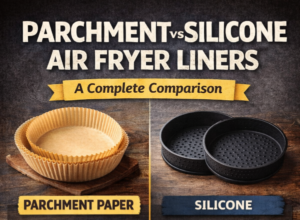
Parchment vs Silicone Air Fryer Liners – A Complete Comparison
Air fryer liners are one of the easiest accessories you can add, and they solve one of the biggest hassles in air frying: cleanup. But should you choose perforated parchment paper liners or reusable silicone liners? This guide breaks down the pros, cons, and best uses for each so you choose exactly the right option for your cooking style.
What Liners Do
Air fryer liners are placed at the bottom of your air fryer basket to:
* Catch drips, crumbs, and grease
* Reduce sticking to the basket
* Make cleanup easier
Good liners don’t block airflow — that’s the key to air frying success.
1) Perforated Parchment Paper Liners
What They Are
Disposable paper liners with holes punched in them for air circulation.
Pros
✅ Very easy cleanup – just toss them after use
✅ Universal fit – usually come in multiple sizes
✅ Inexpensive – cheap packs available
✅ Good for messy foods – sauces and breading stay contained
Cons
❌ Single-use – not reusable
❌ Can tear if wet or overloaded
❌ Must be weighted down before preheating – otherwise wind may lift them
Best For
* Frozen foods
* Sticky or breaded foods
* Beginners who want quick cleanup
👉 View perforated parchment liners built for air fryer baskets
2) Silicone Air Fryer Liners
What They Are
Reusable silicone mats or baskets that protect your fry basket.
Pros
✅ Reusable – long-term cost savings
✅ Soft and flexible – won’t tear
✅ Dishwasher safe – easy to wash
✅ Good for a wide range of foods
Cons
❌ Can trap moisture if not perforated
❌ May block airflow if poorly sized
❌ Higher upfront cost than paper
Best For
* People who cook often
* Sticky or delicate foods (vegetables, fish)
* Those who prefer reusable tools
👉 See perforated silicone liners that make cleanup simple
Head-to-Head Comparison
| Feature | Parchment Paper Liners | Silicone Liners |
|---|---|---|
| Reusability | ❌ Single-use | ✅ Reusable |
| Cleanup Ease | ⭐ Easy | ⭐ Easy |
| Airflow | ⭐ Good (if perforated) | ⭐ Good (if perforated) |
| Cost | 💲 Low | 💲 Medium – High |
| Best for Sticky Food | ⭐ Very Good | ⭐ Very Good |
| Best for Vegetables/Delicate | ⭐ Good | ⭐ Excellent |
| Dishwasher Safe | ❌ No | ✅ Yes |
| Waste Produced | 🌍 Waste | ♻️ Eco-friendly |
When to Choose Which
Pick Parchment Paper Liners if:
* You want no cleanup at all
* You cook infrequently
* You fry frozen snacks and breaded foods
* You want the lowest initial cost
Pick Silicone Liners if:
* You cook with your air fryer often
* You want a reusable option
* You’re cooking vegetables, fish, or delicate items
* You prefer dishwasher cleanup
Tips for Best Results
✔ Always choose perforated liners.
Air frying needs airflow below food. Solid liners block air and lead to soggy results.
✔ Don’t use liners during preheat
Unless the food is already on top of them, they can lift and contact the heating element.
✔ Match liner size to your basket
Too-large liners bunch up and block air.
Quick Recommendation
* Best for beginners: Perforated parchment liners
* Best long-term value: Perforated silicone liners
* Best for general cooking: Pick based on how often you use the air fryer
👉 Explore air fryer accessories that make cooking easier and cleaner
Conclusion
Both liner types make life easier, but they serve slightly different purposes. If you want fast, disposable cleanup, go with perforated parchment paper. If you air fry often and want long-term reuse, choose perforated silicone.
Whichever you pick, make sure it allows airflow because airflow is what makes air frying crisp and delicious.