
How To Use An Air Fryer (Beginner Guide)
If you’re new to air fryers, you’re not alone. Air fryers are one of the easiest kitchen appliances to use, but the first few times can feel confusing. What temperature do you use? Do you need oil? Can you cook frozen food?
This beginner guide walks you through exactly how to use an air fryer step by step, explains common mistakes, and helps you get great results right from the start.
What Is An Air Fryer?
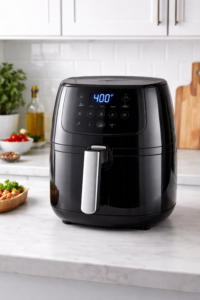
An air fryer is a countertop appliance that cooks food by circulating hot air around it at high speed. This creates a crispy outer layer similar to frying, but with little to no oil.
Air fryers are commonly used to cook:
* Frozen foods (fries, nuggets, wings)
* Vegetables
* Chicken, fish, and meat
* Reheated leftovers
Because air fryers cook faster than ovens and require less oil, they’re popular for quick and convenient meals.
Before You Use Your Air Fryer for the First Time
Before cooking anything, take a few minutes to set up your air fryer properly.
1. Unbox and Clean It
* Remove all packaging, stickers, and inserts
* Wash the basket and tray with warm soapy water
* Wipe down the interior with a damp cloth
2. Place It Safely
* Set the air fryer on a flat, heat‑resistant surface
* Leave several inches of space around the appliance
* Do not place it under cabinets or near walls
3. Do a Test Run (Optional but Helpful)
Many manufacturers recommend running the air fryer empty for 5–10 minutes the first time. This helps burn off any manufacturing residue and may reduce initial smells.
Basic Air Fryer Controls Explained
Most air fryers use the same basic controls:
* Temperature: Usually between 180°F and 400°F (82°C–200°C)
* Timer: Sets how long food cooks
* Presets: Pre‑programmed settings for common foods like fries or chicken
If your air fryer has presets, you can use them as a starting point, but manual temperature and time adjustments often give better results.
How to Use an Air Fryer (Step by Step)
Step 1: Preheat (If Needed)
Some air fryers require preheating, while others do not. If your recipe or manufacturer recommends it, preheat for 3–5 minutes.
Preheating helps food cook more evenly, especially frozen foods and meats.
Step 2: Prepare Your Food
* Lightly coat food with oil if desired (spray or brush works best)
* Season food before cooking
* Pat food dry for crispier results
You usually only need 1–2 teaspoons of oil, or none at all for frozen foods.
Step 3: Load the Basket Properly
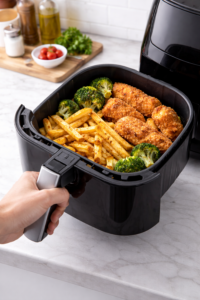
* Place food in a single layer when possible
* Do not overcrowd the basket
* Leave space for air to circulate
Overcrowding is one of the most common beginner mistakes and leads to uneven cooking.
Step 4: Set Temperature and Time
Start with these general guidelines:
* Frozen fries: 380°F for 12–18 minutes
* Chicken breasts: 370°F for 15–20 minutes
* Vegetables: 375°F for 10–15 minutes
* Frozen nuggets or wings: 400°F for 10–15 minutes
Always check food early and adjust as needed.
Step 5: Shake or Flip Halfway Through
For best results:
* Shake fries or small items halfway
* Flip larger foods like chicken or fish
This helps food cook evenly on all sides.
Step 6: Check Doneness
Use a food thermometer when cooking meat:
* Chicken: 165°F (74°C)
* Fish: flakes easily and is opaque
If food isn’t done, return it to the air fryer for a few more minutes.
Common Beginner Mistakes to Avoid
Overcrowding the Basket
Too much food blocks airflow and causes soggy results.
Using Too Much Oil
Excess oil can cause smoking and greasy food.
Forgetting to Shake or Flip
This leads to uneven cooking.
Using Aerosol Cooking Sprays
Some sprays can damage nonstick coatings. Use a refillable oil sprayer instead.
Ignoring the Manual
Different models vary. Always check manufacturer recommendations.
What You Can (and Can’t) Put in an Air Fryer
Safe to Cook:
* Frozen foods
* Meat, poultry, and fish
* Vegetables
* Breads and reheated leftovers
Avoid or Use with Caution:
* Wet batter (drips and makes a mess)
* Cheese alone (melts and burns)
* Lightweight parchment without food (can fly into the heater)
👉 See perforated silicone liners that make cleanup simple
Cleaning Your Air Fryer After Use
* Let the appliance cool completely
* Remove the basket and tray
* Wash with warm soapy water
* Wipe the interior with a damp cloth
Cleaning after each use prevents odors and buildup.
👉 View our complete air fryer cleaning guide
Air Fryer Tips For Best Results
* Start with less time and add more if needed
* Keep foods similar in size
* Use accessories designed for air fryers
* Experiment and take notes
Air fryers are forgiving, and results improve quickly with practice.
Frequently Asked Questions
Do I need oil in an air fryer?
No, but a small amount can improve crispiness.
Can I use aluminum foil?
Yes, as long as it doesn’t block airflow and is weighed down by food.
Can I cook frozen food without thawing?
Yes. Frozen foods work very well in air fryers.
Is an air fryer healthier than deep frying?
Air fryers typically use much less oil, which can reduce fat and calories.
Latest Guides
Final Thoughts
Learning how to use an air fryer is simple once you understand the basics. With the right temperature, proper spacing, and a little practice, you can cook quick, crispy, and satisfying meals with minimal effort.
If you’re just starting out, focus on simple foods, avoid overcrowding, and don’t be afraid to experiment. Your air fryer will quickly become one of the most used appliances in your kitchen.
For more beginner tips, cleaning guides, and air fryer comparisons, explore the rest of AirFryerTrend.com.